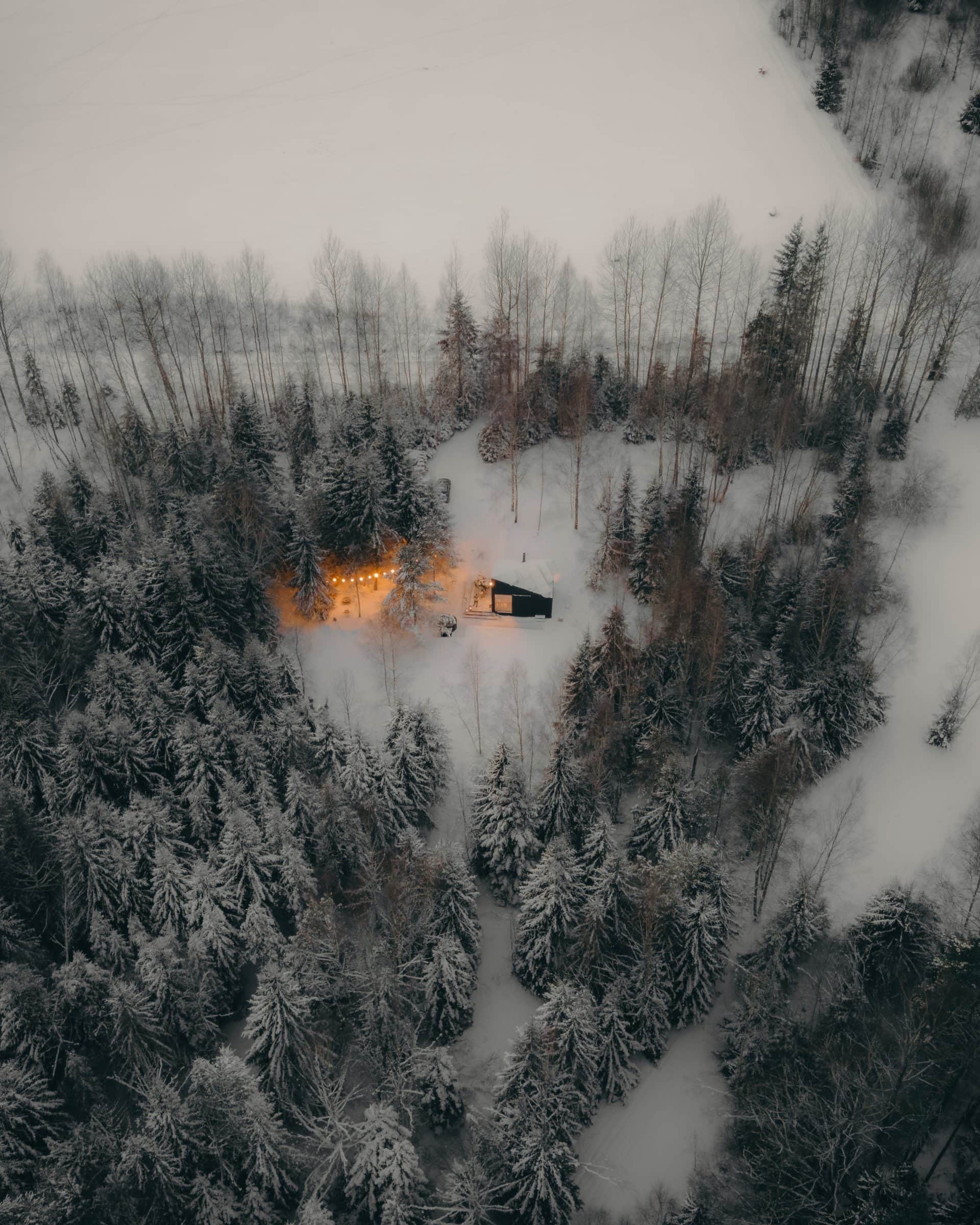
I — The land
The land was Evija's first.
Her father bought a patch of forest near Augšlīgatne a long time ago, with a vague plan to collect firewood. He never came back to it. The bushes won. By the time Maris met her, it was an overgrown rectangle in the Gauja valley, surrounded by national park, useful to no one.
Evija grew up nearby. Maris is from the city — he spent his career in tech, building things on screens, for screens. Through her, he came to know a different Latvia: the river, the trails, the long winters, the paper-mill town nearby that still smelled of wood. They walked the land sometimes. They talked, occasionally, about building something there. A cabin. A retreat. Something quiet. The numbers always stopped them — no road, no water, no electricity, no sewage, no excuse for the spend. They stayed in apartments and went elsewhere on holiday.
They went a lot of elsewheres. Malta, Bali, months across Southeast Asia, the Americas, most of Europe. They were the kind of couple that finds reasons to leave.
II — A mountain town
Then a small village in northern Vietnam.
They were riding a motorbike through villages where no one spoke English, where the houses leaned against the hillside, where the views over the valleys were the kind of thing tourists would pay to see. They stopped for the night at the only hotel in town. And they noticed something strange: not one of the buildings had windows facing the view. The houses turned their backs on the mountains. The windows looked at other windows.
They puzzled over it. Maybe heat. Maybe an inheritance of post-Soviet pragmatism — efficiency over beauty, function over view. Whatever the reason, the answer they kept circling was sadder than that:
people stop seeing where they live.
The mountains had been there forever. The villagers had work to do. The window faced the next house because the next house was what mattered today. The view took care of itself, and so it became invisible.
The thought followed them. Through the rest of Vietnam. Through three months in Sri Lanka. Onto the plane home.
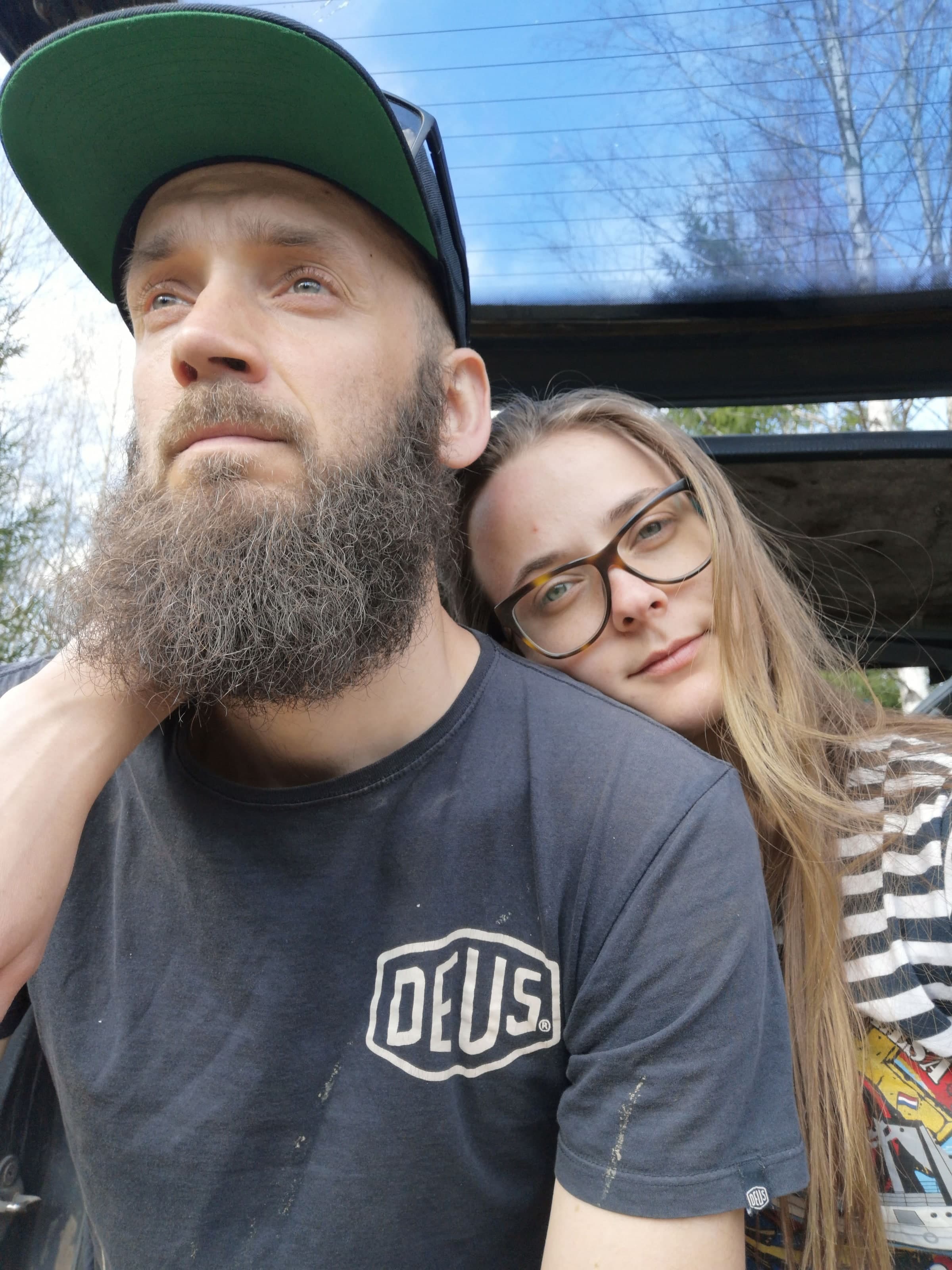
III — We start
We came back to Latvia in the spring.
We drove out to the land, half-expecting nothing to have changed, and nothing had. We sat on the bonnet of the 4×4 and looked at it — the bushes, the silence, the trees behind the trees. And the same thought came back, but turned around: we are doing what those people in Vietnam are doing. We owned a patch of forest in one of the most forested countries in Europe, in a national park, on land that had been in our family for decades, and we had not built anything there because the spreadsheet said no.
We started clearing the bushes that week.
We built it ourselves — Evija and I, together. Neither of us is an architect. We made every decision twice: once on paper, once again when something didn't work and we fixed it. Black spruce on the outside because the forest is dark and we didn't want to fight it. Birch veneer inside because the light needed somewhere to land. Five-meter ceilings because the trees outside are tall, and a ceiling that low would have felt like a lie. French herringbone oak because we wanted one detail underfoot that asked you to look down. The form is monolithic — a single shape — because that was the original drawing on the napkin, and we kept the napkin's discipline through two years of decisions.
We thought about windows a lot. Every window faces the forest. None of them face another window.
When the cabin was finished, we realized something obvious: we were going to be there two weekends a year. The rest of the time it would sit empty in the trees. So we made the only decision that made sense — we let other people stay in it.
We don't think of it as a business.
We think of it as a window we built
so other people could look out of it.